
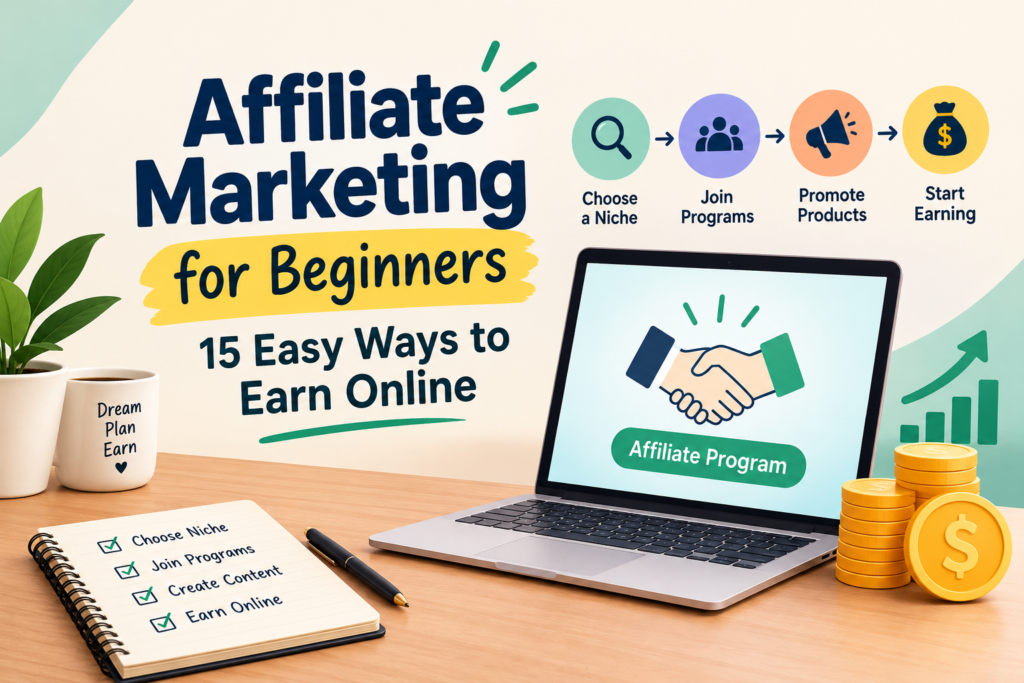
Affiliate Marketing for Beginners: 15 Easy Ways to Start Earning Online
Introduction
Affiliate marketing for beginners is one of the most popular ways to start earning money online without creating your own products. It allows you to promote products or services offered by other companies and earn a commission when someone makes a purchase through your unique affiliate link.
Many people want to make money online but do not know where to begin. Some think they need a large investment, advanced technical skills, or thousands of followers to get started. However, affiliate marketing can be started with a simple website, a social media account, or a YouTube channel.
The most important things are choosing the right niche, understanding your audience, creating helpful content, and promoting relevant products. Although affiliate marketing offers opportunities to earn income, success is not guaranteed. It usually takes time, patience, and consistent effort to build an audience and generate sales.
In this guide, you will learn how affiliate marketing works, how to choose a niche, where to find affiliate programs, and how to use 15 practical strategies to start your journey.
What Is Affiliate Marketing?
Affiliate marketing is an online business model in which you promote another company’s products or services and receive a commission when people complete qualifying actions through your referral link.
For example, imagine you have a blog about technology. You publish an article reviewing laptops for students and include affiliate links to suitable products. When a reader clicks one of those links and makes an eligible purchase, you may earn a commission.
You do not need to manufacture products, manage inventory, package orders, or handle shipping. The company or merchant generally takes care of these responsibilities.
Affiliate marketing usually involves three main parties:
- The merchant: The company or individual selling a product or service.
- The affiliate: The person who promotes the product and earns commissions.
- The customer: The person who clicks the affiliate link and completes a purchase or another qualifying action.
An affiliate network or tracking platform may also connect merchants with affiliates and record sales.
How Does Affiliate Marketing Work?
Affiliate marketing follows a straightforward process. First, you join an affiliate program and receive a unique tracking link. Next, you share that link through useful content, such as blog posts, videos, product comparisons, or social media posts.
When someone clicks your link, tracking technology may record the referral. If the visitor completes the required action within the program’s tracking period, the sale or lead may be credited to you.
The merchant or affiliate network then calculates your commission according to its terms.
For example, suppose you promote a product that costs $100 and the affiliate program offers a 5% commission. If a qualifying purchase is correctly attributed to your link, your commission would be $5.
Your actual earnings depend on the commission structure, product price, conversion rate, program rules, and number of successful referrals. Returns, cancellations, and tracking limitations may also affect payments.
Why Is Affiliate Marketing Good for Beginners?
Affiliate marketing can be a useful starting point for people who want to explore online business. It does not require you to develop your own product or maintain a warehouse.
Here are some potential benefits.
1. Low Startup Costs
You can begin with free social media platforms or a basic website. You may eventually spend money on hosting, a domain, email tools, or content creation, but a large initial investment is not always necessary.
2. No Inventory Management
You promote products that already exist. The merchant generally handles stock, delivery, and customer service related to the order.
3. Flexible Working Hours
You can create content during your free time. This flexibility may suit students, employees, parents, and people who want to build a side business.
4. Different Ways to Promote Products
You can use blogging, YouTube, email newsletters, Pinterest where permitted, or other suitable social platforms. You can select the method that best matches your skills.
5. Potential for Long-Term Income
Helpful content can continue attracting visitors after publication. However, traffic and commissions can change, and there is no guarantee that an article or video will generate ongoing income.
15 Easy Ways to Start Affiliate Marketing for Beginners
If you are new to this business model, start with simple methods and improve your strategy as you gain experience.
1. Choose a Profitable Niche
A niche is the main topic your content focuses on. Choosing a clear niche helps you attract people who are interested in similar products and services.
Some popular affiliate marketing niches include:
- Technology and electronics
- Personal finance education
- Home office equipment
- Online learning and education
- Fitness and general wellness products
- Beauty and skincare
- Travel accessories
- Software and digital tools
Do not select a niche only because it appears profitable. Choose a topic you understand or are willing to research carefully.
For example, if you enjoy writing about online business, you could promote website hosting, email marketing software, productivity tools, or educational courses.
Research the audience’s needs, the availability of relevant products, commission terms, and competition before making your decision.
2. Join Affiliate Programs
After choosing your niche, look for affiliate programs that offer products relevant to your audience.
Some well-known options include Amazon Associates, Awin, CJ Affiliate, Impact, and individual company affiliate programs. Availability, eligibility, payment methods, and approval requirements vary by country and program.
Before applying, review each program’s rules. Some require an established website or meaningful content, while others may accept applicants with qualifying social media accounts.
Check commission rates, payment thresholds, tracking periods, permitted traffic sources, and promotional restrictions. Do not choose a program based only on its advertised commission rate.
3. Create a Website or Blog
A website gives you a place to publish detailed articles and organize your recommendations. You can create product reviews, comparison guides, tutorials, and beginner-friendly educational content.
For example, a technology blog might publish articles such as:
- Best Budget Laptops for Students
- Best Tools for Starting an Online Business
- Website Hosting Options for Beginners
- How to Choose Email Marketing Software
Each article should answer a real question and help readers make informed decisions.
Use a clear website structure, readable formatting, descriptive headings, and fast-loading pages. Include affiliate disclosures and avoid publishing content that simply repeats information from other websites.
4. Start a YouTube Channel
YouTube can help you demonstrate how products work. Videos allow viewers to see a product in action and understand its advantages and limitations.
You could create tutorials, software demonstrations, comparisons, setup guides, or honest reviews.
For example, a video titled “How to Use a Website Builder for Beginners” could explain the main features of a website builder and include a relevant affiliate link where permitted.
You do not necessarily need expensive equipment. Clear explanations, useful demonstrations, good audio, and accurate information are more important than complicated production.
Always disclose affiliate relationships clearly in your video and near relevant links.
5. Use Social Media Strategically
Social media can help you reach people interested in your niche. Depending on your topic, you might use Facebook, Instagram, TikTok, Pinterest, or another platform.
Instead of sharing affiliate links repeatedly, publish useful content that attracts attention and builds trust.
Examples include product demonstrations, short tutorials, helpful tips, comparisons, and answers to common questions.
Follow the platform’s commercial-content policies and the affiliate program’s rules. Some platforms restrict certain link types or promotional practices, so check the current requirements before posting.
6. Write Helpful Product Reviews
Product reviews can attract people who are comparing different options before buying.
A strong review explains what the product does, who may benefit from it, its main features, possible disadvantages, pricing considerations, and suitable alternatives.
If you have personally tested the product, describe your experience accurately. If you have not tested it, do not pretend that you have.
For example, a review of an email marketing tool could discuss its available features, ease of use, pricing plans, and limitations for small businesses.
Honest reviews are more useful than exaggerated claims. Your goal should be to help readers choose the right product, even when that means recommending a cheaper alternative or advising them not to buy.
7. Create Product Comparison Articles
Comparison articles help readers understand the differences between similar products.
You might compare two website builders, three email marketing tools, or different laptop models for students.
Explain which option is better for different needs instead of declaring one product the best for everyone.
Include relevant features, pricing information where verified, advantages, disadvantages, and links to official product pages.
Keep comparisons up to date because product features and subscription prices can change. Make it clear when information was last checked if freshness matters to the reader.
8. Learn Basic SEO
Search engine optimization, or SEO, helps your content become easier for search engines to understand and potentially discover.
Start with keyword research. Look for questions people ask about your niche and identify search terms that match the content you can genuinely provide.
For example, a beginner affiliate marketing website might target phrases such as “best website builder for beginners” or “how to choose email marketing software.”
Use your main keyword naturally in the title, introduction, relevant headings, URL slug, and meta description when appropriate.
Write descriptive headings, link to related articles, optimize images, and make your website mobile-friendly.
SEO results are not immediate or guaranteed. Focus on helpful, original content rather than repeating keywords unnaturally.
9. Build an Email List
An email list allows you to communicate with people who have chosen to receive your messages.
You can offer a useful resource, such as a checklist, beginner’s guide, or template, in exchange for an email subscription. Make sure your signup process clearly explains what subscribers can expect.
Send helpful emails that solve problems, explain useful tools, and share relevant resources. Affiliate recommendations should fit the reader’s interests rather than appear in every message.
Follow applicable email marketing and privacy laws. Provide an easy unsubscribe option and obtain consent where required.
10. Promote Digital Products and Software
Digital products can include online courses, design tools, business software, templates, and educational resources.
Some programs offer recurring commissions for eligible subscriptions, while others pay a one-time commission. The exact structure depends on the merchant.
Software products may be particularly relevant to audiences interested in blogging, freelancing, productivity, or online business.
Before recommending a tool, investigate its features, limitations, pricing, cancellation terms, and suitability for beginners. Promote products that genuinely solve a problem for your readers.
11. Use Tutorials to Demonstrate Products
Tutorials provide practical value while showing how a product can solve a particular problem.
For example, you could publish a guide on setting up a blog, designing a presentation, organizing freelance projects, or creating an email newsletter.
Explain each step clearly and use screenshots or demonstrations where appropriate.
Mention the product when it is genuinely useful for completing the task. Do not force an affiliate link into a tutorial if a free alternative is better for the reader.
12. Answer Questions in Online Communities
Online communities can help you discover the problems people experience in your niche. Forums, discussion groups, and question-and-answer platforms may reveal common questions about products and services.
Participate by offering useful explanations rather than treating communities as places to distribute links.
Read the rules of each community before sharing commercial content. Some communities prohibit affiliate links or self-promotion entirely.
A thoughtful answer can help someone make a better decision and may build your reputation over time. Where links are allowed, disclose your affiliate relationship clearly.
13. Track Clicks and Conversions
Successful affiliate marketing requires more than publishing content. You need to understand which activities produce useful results.
Most affiliate dashboards provide information about clicks, qualifying sales, commissions, or conversion rates. Some also report refunds and other adjustments.
Review your performance regularly.
If an article attracts many visitors but few clicks, its recommendations or calls to action may need improvement. If many people click but few purchase, the product might not match their needs, or the landing page may not convert well.
Use tracking data to improve your content rather than making random changes.
14. Update Your Existing Content
Older articles may lose relevance when prices, features, products, and search trends change.
Review your content periodically. Replace outdated information, fix broken links, correct inaccurate statements, and add useful details where needed.
You can also improve titles, headings, internal links, and explanations when doing so makes the page more helpful.
Do not update dates merely to make an article appear fresh. Make meaningful changes and communicate important updates accurately.
15. Be Consistent and Patient
Affiliate marketing is not a guaranteed way to earn money quickly. A new website may take considerable time to attract search traffic, while a social media account may need consistent publishing to reach the right audience.
Create a realistic schedule that you can maintain.
For example, you could publish two useful blog posts each week, share short educational posts between publications, and review your analytics every month.
Pay attention to what your audience finds helpful. Over time, improve your content based on questions, engagement, clicks, and conversions.
Consistency does not guarantee success, but it gives you more opportunities to learn and refine your approach.
Common Affiliate Marketing Mistakes Beginners Should Avoid
Beginners can waste time by focusing on commissions instead of audience needs. Avoiding common mistakes can help you build a more sustainable approach.
Promoting Too Many Products
Promoting dozens of unrelated products can make your website confusing. Start with a small selection of relevant products and explain why each one may be useful.
Choosing Products Only for High Commissions
A high commission does not make a product suitable for your audience. Poor recommendations can damage your credibility and reduce long-term trust.
Copying Other Websites
Copied content rarely provides readers with a compelling reason to visit your website. Add original explanations, meaningful comparisons, practical examples, and accurate information.
Expecting Immediate Results
Affiliate marketing requires time to develop content, attract an audience, and understand what converts. Avoid spending money you cannot afford to lose based on unrealistic income promises.
Ignoring Affiliate Disclosures
Readers should understand when you may earn a commission. Follow applicable laws and platform policies, and place clear disclosures where people can see them before or near affiliate links.
Ignoring Website Quality
Slow pages, broken links, confusing navigation, and poor mobile design can make it harder for visitors to use your website. Test your pages regularly and make the experience straightforward.
How Much Can Beginners Earn From Affiliate Marketing?
There is no fixed amount that every beginner can earn. Some affiliates earn nothing initially, while others gradually develop revenue as their content and audience grow.
Your income depends on several factors:
- The number of relevant visitors or viewers you attract.
- The percentage of visitors who click your affiliate links.
- The percentage of referred visitors who complete qualifying actions.
- The average commission earned per conversion.
- The relevance and quality of the products you recommend.
- The affiliate program’s tracking and payment rules.
Consider a hypothetical example. If 1,000 relevant visitors reach a page, 5% click an affiliate link, and 3% of those clicks result in qualifying purchases, you would receive approximately 1.5 purchases on average over a sufficiently large number of similar visits. At a $10 commission per purchase, that traffic would correspond to about $15 in commission.
This is only an illustration, not a typical earnings estimate or guarantee. Actual results may be significantly higher or lower, and a small sample may produce no sales at all.
Focus on creating useful content and understanding your audience instead of relying on unrealistic income claims.
A Simple 30-Day Affiliate Marketing Plan
If you are unsure how to begin, use this practical four-week plan.
Week 1: Choose Your Niche
Select one topic, research the audience, identify common questions, and shortlist suitable products or services.
Week 2: Set Up Your Platform
Create a basic website, blog, or content channel. Review relevant affiliate programs and apply to those that fit your audience and meet your eligibility requirements.
Week 3: Publish Helpful Content
Create your first few articles, tutorials, or videos. Focus on answering real questions and providing accurate information.
Week 4: Improve and Measure
Add appropriate affiliate links and disclosures. Review traffic, clicks, and any available conversion data. Identify improvements for the next month.
At the end of 30 days, you may have a foundation for your affiliate marketing business. You should not expect the plan to guarantee sales or a particular income.
Is Affiliate Marketing Worth It for Beginners?
Affiliate marketing may be worth exploring if you enjoy creating content, researching products, teaching others, or building an online audience.
It offers a way to promote existing products without managing your own inventory. You can begin with relatively low costs and choose from several promotional methods.
However, it also involves challenges. Competition can be high, search rankings can change, affiliate programs may alter their terms, and some content may never generate meaningful income.
The best approach is to treat affiliate marketing as a business that requires research, useful content, ethical promotion, and ongoing improvement.
Choose a niche you can understand, work with reputable programs, disclose affiliate relationships, and focus on helping people make informed decisions.
Conclusion
Affiliate marketing for beginners can be a practical starting point for people who want to explore earning money online. You do not need to create your own products, and you can begin by using a blog, social media platform, or YouTube channel.
Start by selecting a niche, researching suitable affiliate programs, and creating helpful content. Use SEO and other appropriate promotional methods to reach your audience, then track results and improve your strategy.
Avoid unrealistic income promises and never recommend products simply because they offer high commissions. Build trust by providing accurate information and honest recommendations.
With patience, consistent effort, and a willingness to learn, you can develop the skills needed to build an affiliate marketing website or content business over time. Focus on helping your audience first, and treat commissions as a possible result of providing genuine value.